

Featured Products

Heliocare 360º Sport Transparent Stick SPF 50+
See product
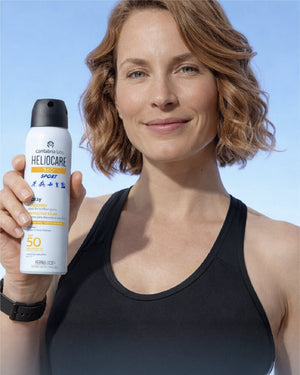
Heliocare 360º Sport Spray SPF 50
See product
Heliocare 360º Sport Sun Oral Sticks
See productIf you get breakouts after training, you’re not alone. Sweat, heat, and friction can disrupt the skin’s balance and promote the appearance of imperfections, especially if the right products are not used. The good news is that you don’t have to choose between taking care of your skin and maintaining an active routine.
In this article, we explain why these breakouts appear, how to differentiate them from common acne, and, most importantly, what type of sunscreen and care you should incorporate to train without damaging your skin.
Why do breakouts appear due to sweat during exercise?
Breakouts that appear during or after exercise are quite common and, in most cases, have a simple explanation: the combination of sweat, heat, friction, and bacterial growth on the skin.
During physical activity, the body increases sweat production to regulate temperature. At the same time, the skin may also produce more sebum.
This mixture of sweat, oil, and dead skin cells can end up clogging pores, promoting the appearance of small acne-like lesions, especially on areas such as the face, chest, or back.
In other cases, it’s not acne as such, but rather a heat rash, known as miliaria. This occurs when sweat ducts become blocked and sweat gets trapped under the skin, causing small red bumps that may itch or sting. It is common in areas where clothing rubs or where moisture accumulates.
Additionally, the humid environment created by sweat—especially when it remains on the skin for a prolonged time—encourages bacterial growth. This happens, for example, when we don’t shower after training or stay in sweaty clothes for too long, which can worsen irritation and breakouts.
Another important factor in sweat-related acne is friction. Wearing tight clothing, backpacks, straps, or sports equipment can lead to what is known as mechanical acne: skin irritation caused by repeated rubbing, intensified by sweat.
To prevent these breakouts, it is recommended to shower as soon as possible after exercising, wear breathable clothing that allows sweat to evaporate, and maintain proper skin hygiene with gentle products.
For people prone to acne, it may be helpful to incorporate active ingredients such as salicylic acid or niacinamide into their skincare routine.
In any case, if the lesions persist, worsen, or cause significant discomfort, it is advisable to consult a dermatologist to determine the most appropriate treatment.
Difference between common acne and sweat-induced breakouts
Although they may look similar at first glance, common acne and sweat-induced breakouts have a very different origin and behavior. Understanding this difference is key to treating them correctly and preventing the problem from worsening.
Common acne is a more complex and often persistent skin condition. It is linked to internal factors such as excess sebum production, clogged pores, and the proliferation of bacteria like Cutibacterium acnes, as well as hormonal influence. That’s why it tends to appear repeatedly and persist over time if not properly treated.
It presents with different types of lesions, which can vary in severity:
- Blackheads and whiteheads (comedones)
- Inflamed pimples (papules and pustules)
- Deeper, more painful lesions such as cysts
It is common on areas such as the face, chest, or back, and although sweat is not its direct cause, it can worsen its progression if proper hygiene is not maintained after exercise.
On the other hand, sweat-induced breakouts have a much more temporary and external origin. They appear as a response to specific exercise conditions, such as heat, humidity, or continuous friction on the skin.
In many cases, it is a heat rash (miliaria), which occurs when sweat ducts become blocked and sweat is trapped under the skin.
The characteristics of sweat-induced acne are quite distinctive:
- Small red or clear bumps
- Itching or stinging sensation rather than pain
- Appearance in areas of friction or sweat accumulation (neck, back, chest, folds)
- Fast evolution: they appear during or after exercise and disappear quickly if the skin is properly cleaned and dried
In short, while acne is driven by internal processes and tends to be more long-lasting, sweat-induced breakouts are a temporary skin reaction to external factors.
Differentiating them allows you to apply the right approach in each case: targeted and consistent treatment for acne, and hygiene and prevention measures for sweat-related breakouts.
How to prevent sweat acne: 5 key tips for athletes
Sweat-related acne is one of the most common skin issues among active individuals. The combination of heat, humidity, friction, and sebum buildup can clog pores and cause breakouts. The good news is that with a few simple habits, it can be effectively prevented.
5 practical tips to prevent sweat acne if you exercise:
1. Shower as soon as possible after training
Sweat itself isn’t the problem, but leaving it on your skin for too long is. When mixed with oil, bacteria, and dead skin cells, it can clog pores.
- Try to shower right after exercise
- If you can’t, at least cleanse your skin with water or specific wipes
- Pay special attention to face, chest, and back
2. Wear breathable clothing and avoid fabrics that retain moisture
Sportswear plays a key role in skin health.
- Choose technical fabrics that allow sweat to evaporate
- Avoid cotton during training, as it retains moisture
- Do not reuse sweaty clothing without washing it
The longer the skin stays damp, the higher the risk of irritation and breakouts.
3. Avoid unnecessary friction
Constant rubbing, combined with sweat, can cause mechanical acne.
- Wear well-fitted clothing without excessive tightness
- Be mindful of backpacks, straps, helmets, or sports bras
- If you train frequently, check areas prone to friction
Reducing friction helps prevent irritation and inflammation.
4. Maintain good facial hygiene (before and after exercise)
Training with dirty or makeup-covered skin can increase pore blockage.
- Cleanse your face before training if you’ve used makeup or heavy sunscreen
- After exercise, use a gentle cleanser
- If acne-prone, consider actives like salicylic acid or niacinamide
Proper cleansing helps keep pores clear.
5. Avoid touching your skin during training
It’s common to touch your face with your hands or towel during exercise, but this can transfer bacteria and worsen breakouts.
- Avoid leaning on dirty surfaces
- Use a clean towel and change it frequently
- Avoid picking or squeezing pimples
In summary, preventing sweat acne doesn’t require major changes, but consistency with small habits: hygiene, proper clothing, and avoiding prolonged moisture. These actions make a difference in maintaining healthy skin even with an intense training routine.
How to choose the best sunscreens and acne treatments
Choosing the right sunscreen and acne treatments is essential to keep the skin balanced and prevent breakouts from worsening.
If you have acne-prone skin, it’s not enough to use just any product: it’s important to choose formulas that protect, treat, and respect the skin without clogging pores or disrupting its natural function.
When it comes to sunscreen, many people with acne tend to avoid it for fear of greasiness or breakouts. However, the opposite is true: unprotected sun exposure can increase inflammation, thicken the skin, and worsen acne over time.
The key is to choose a suitable sunscreen with lightweight, fast-absorbing textures that leave no greasy residue or heavy feeling. Gel, fluid, or matte-finish formulas are usually the best options.
On the other hand, creams designed to treat sweat-related acne should focus on addressing the root causes: excess sebum, clogged pores, and inflammation.
It’s important to choose products with effective yet well-tolerated active ingredients that improve skin texture without causing irritation. Additionally, hydration is still essential even for oily skin, so lightweight formulas that maintain balance without adding excess oil are recommended.
In both cases—sun protection and treatment—the goal is not to “dry out” the skin excessively, but to keep it balanced. A proper routine with well-chosen products not only helps reduce existing breakouts but also prevents new ones and improves overall skin appearance in the long term.
Within this selection, there is a key aspect to always check: product labels and characteristics that indicate whether they are suitable for acne-prone skin. Below are the most important ones.
Labels to look for: Oil-free, non-comedogenic, and dry touch
When choosing products for acne-prone skin, not only texture and ingredients matter: product labels can give you valuable clues about whether they are right for you. Understanding them will help you avoid formulas that may clog pores or increase oil production.
These are the three key features to look for:
Oil-free
Indicates that the product is formulated without added oils, making it lighter and more suitable for oily or acne-prone skin. These formulas help reduce shine and prevent pore congestion.
That said, “oil-free” does not mean non-hydrating. There are lightweight hydrating ingredients that provide moisture without heavy lipids.
Non-comedogenic
This label means the product is designed to not clog pores, one of the main factors in acne development.
It is especially important in sunscreens, moisturizers, and makeup, as these products remain on the skin for hours. Choosing non-comedogenic formulas helps prevent blackheads, whiteheads, and breakouts.
Dry touch (matte finish)
This refers to the final feel of the product on the skin. Dry-touch formulas absorb quickly and leave a matte finish without stickiness or shine.
This type of finish is especially recommended for active lifestyles, as it reduces discomfort from sweat mixing with heavy products.
Overall, looking for these three features—oil-free, non-comedogenic, and dry touch—is a simple and effective way to ensure you’re using products compatible with your skin type.
Post-workout routine to eliminate sweat-induced breakouts
After training, your skin needs more than just a quick shower. Sweat, friction, and bacterial buildup can lead to breakouts if not addressed properly.
That’s why establishing a proper post-workout routine is key to keeping skin clean, balanced, and free of imperfections.
Here are the essential steps:
1. Cleanse your skin as soon as possible
The first and most important step is removing sweat quickly. When it stays on the skin, it mixes with oil, dead cells, and bacteria, increasing the risk of clogged pores.
- Shower immediately after training whenever possible
- If not, at least cleanse face, chest, and back
- Use a gentle cleanser that respects the skin
2. Use a suitable (non-harsh) cleanser
The goal is not to overdry the skin, but to cleanse it properly.
- Choose gentle or acne-specific cleansers
- Ingredients like salicylic acid can help keep pores clear
- Avoid harsh soaps that may irritate or disrupt the skin
Over-cleansing can trigger more oil production.
3. Change out of sweaty clothes immediately
Damp clothing maintains continuous contact between sweat and skin, increasing irritation.
- Remove workout clothes as soon as possible
- Wear clean, dry garments afterward
- Avoid staying in sweaty clothes for long periods
4. Hydrate the skin with lightweight products
Even if you have oily or acne-prone skin, hydration is still necessary.
- Choose lightweight, oil-free, non-comedogenic formulas
- They help restore the skin barrier without clogging pores
- Avoid heavy creams immediately after exercise
5. Pay attention to details: towel, hands, and accessories
Small habits that make a big difference:
- Use a clean towel and change it frequently
- Avoid touching your face with dirty hands
- Clean accessories like helmets, bands, or mats
A good post-workout routine doesn’t have to be complicated, but it must be consistent. Cleaning the skin, avoiding prolonged moisture, and using the right products are the pillars to prevent sweat-induced breakouts.
Conclusion: Keep your skin clean and protected without giving up sports
Maintaining healthy, breakout-free skin doesn’t mean giving up exercise, but learning how to care for your skin before and after each workout.
Sweat is part of an active and healthy lifestyle, but managing it properly makes the difference between balanced skin and imperfections.
Adopting simple habits like cleansing after exercise, using appropriate products, and avoiding prolonged moisture allows you to enjoy sports without compromising your skin health.
Ultimately, it’s not about making big changes, but being consistent with small habits that have a real long-term impact.
Because when you take care of your skin the same way you take care of your body, you achieve a complete balance: performance, well-being, and confidence in your daily life.

From the NDL Pro-Health team we will provide you with tips to maintain a healthy lifestyle. Sharing knowledge and product recommendations to offer optimal solutions for your daily routine, for your workouts and subsequent recovery, all with the goal of helping you achieve physical and mental wellness.
Reseñas destacadas
-
Me encanta
Fácil de llevar, fácil de aplicar. Lo llevas en el bolso, no pesa nada y así te reaplicas en cualquier sitio. No da nada de grasa
-
Heliocare
Muy fácil de aplicar para adquirir protección total
-
Aún no lo he probado, pero tiene buena pinta. Es un detalle como regalo
