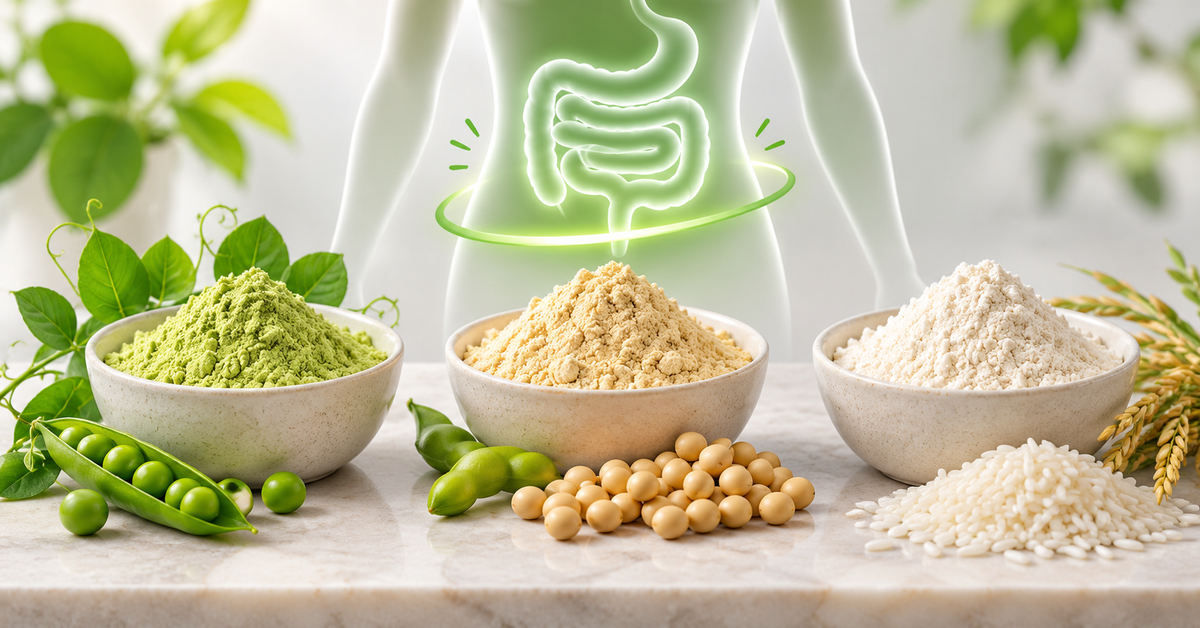
Not all plant-based proteins affect your gut in the same way, and choosing the right formula can make a difference. Therefore, if you are looking for information about plant-based protein for irritable bowel syndrome, it is important to know which proteins are generally better tolerated, which ingredients to avoid and how to prepare your shakes to reduce the risk of digestive discomfort.
Can I Take Plant-Based Protein Supplements If I Have Irritable Bowel Syndrome?
Yes, but you should choose protein isolates with a low FODMAP content. People with irritable bowel syndrome (IBS) can include plant-based protein supplements in their diet, but they should carefully review the formula and how they consume it to avoid digestive discomfort.
In fact, choosing a suitable vegan protein for IBS can help you supplement your protein intake without adding ingredients that may worsen your digestive symptoms.
The key is to understand that eating a whole legume is not the same as consuming its isolated protein.
Legumes generally contain fibre and fermentable oligosaccharides, carbohydrates belonging to the FODMAP group. These compounds can reach the large intestine, where they are fermented by the gut microbiota, producing gas that may intensify bloating, abdominal pain or changes in bowel habits.
However, during the production of plant protein isolate (isolate), much of the fibre, starch and fermentable carbohydrates are removed. This produces a supplement with a high protein concentration and, depending on the manufacturing process, a lower FODMAP content.
That is why pea or rice protein isolates may be interesting alternatives for people with IBS, provided that their composition is suitable and they are well tolerated individually. In this regard, choosing a low-FODMAP vegan protein can be a useful strategy to supplement your diet without unnecessarily increasing your intake of fermentable carbohydrates.
3 Ingredients in Plant-Based Protein Shakes That Can Trigger IBS Flare-Ups
Even when a plant-based protein is of good quality, certain added ingredients can cause gas, bloating or digestive discomfort in people with irritable bowel syndrome (IBS). Therefore, checking the shake's ingredients is essential to improve digestive tolerance.
-
Polyols and Artificial Sweeteners (Erythritol, Xylitol, Sorbitol)
Some sweeteners, particularly polyols such as sorbitol and xylitol, are incompletely absorbed in the intestine. This can lead to an increase in intestinal water content, contributing to diarrhoea, gas and abdominal cramps. Erythritol is generally better tolerated, although large amounts may also cause discomfort.
As an alternative, consider formulas sweetened with stevia or without added sweeteners. If you prefer more appealing flavours, you can also explore chocolate-flavoured protein isolate options, provided they do not contain polyols that could trigger symptoms.
-
Excessive Thickening Gums (Xanthan, Guar)
Xanthan and guar gums are used in plant-based shakes to improve texture and create a creamier consistency. However, in large amounts, they can increase the viscosity of intestinal contents and contribute to digestive discomfort.
Therefore, if you have IBS, it is advisable to prioritise simple formulas and monitor your tolerance to thickening agents.
-
Unpurified Legume Protein Concentrates
Plant proteins derived from legumes, such as peas or soy, may contain fibre and fermentable oligosaccharides (FODMAPs), which contribute to gas and abdominal distension.
While protein concentrates (Concentrate) may retain a higher proportion of these components, protein isolates (Isolate) undergo purification processes that remove much of the fibre and fermentable carbohydrates.
Therefore, if you have IBS, prioritise plant protein isolates (Isolate) with a verified low FODMAP content. Although the term Isolate does not guarantee the absence of discomfort, it can be a useful starting point when choosing a shake that is easier to tolerate.
This distinction is also important when comparing pea protein products for IBS, as the degree of purification and added ingredients can significantly affect digestive tolerance.
How to Enjoy Your Protein Shake Without Discomfort: 4 Golden Rules
If you are wondering how to take protein when you have IBS, it is important to understand that not only the type of plant-based protein matters, but also how you prepare it and when you consume it:
- Choose what you mix it with carefully: Avoid plant-based drinks containing high-FODMAP ingredients, such as certain soy or oat drinks. The simplest option is to prepare your shake with water or a certified low-FODMAP plant-based drink.
- Avoid excessive air in your shake: Use a manual shaker or a blender on a low setting to reduce foam formation. Drinking a very foamy shake quickly may increase air swallowing and worsen bloating.
- Space your shakes away from large meals: Consuming a shake immediately after a substantial meal may increase feelings of heaviness.
- Consider formulas containing proteolytic enzymes: These enzymes help break down proteins into smaller fragments during digestion. Although they have not been proven to prevent IBS flare-ups, they may help reduce feelings of heaviness after consumption.
Frequently Asked Questions About IBS and Plant-Based Protein Supplements
Is Pea Protein Low in FODMAPs?
Pea protein isolate can be low in FODMAPs because its purification process removes much of the fibre and fermentable oligosaccharides naturally present in peas. However, this depends greatly on the manufacturer and the specific production process.
If you have irritable bowel syndrome, prioritise formulas with a verified low FODMAP content. This is particularly important when choosing pea protein supplements for IBS, as not all products have the same composition or offer identical digestive tolerance.
What Is the Best Time of Day to Take Plant-Based Protein If I Have IBS?
There is no specific time of day that is best for everyone with IBS. The important thing is to adapt consumption to your digestive tolerance. You can try having your shake between meals, avoiding it immediately after large meals. It is also advisable to start with small amounts and gradually increase the serving size if well tolerated.
Which Plant-Based Protein Is Best for Avoiding Gas and Bloating If I Have IBS?
Pea and rice protein isolates can be good alternatives for people with sensitive digestion. Their processing removes much of the fermentable carbohydrates, while combining both sources provides a balanced essential amino acid profile.
To improve tolerance, look for low-FODMAP formulas without problematic polyols and with a simple ingredient list. Digestive enzymes may help break down proteins, although they have not been proven to prevent IBS symptoms.