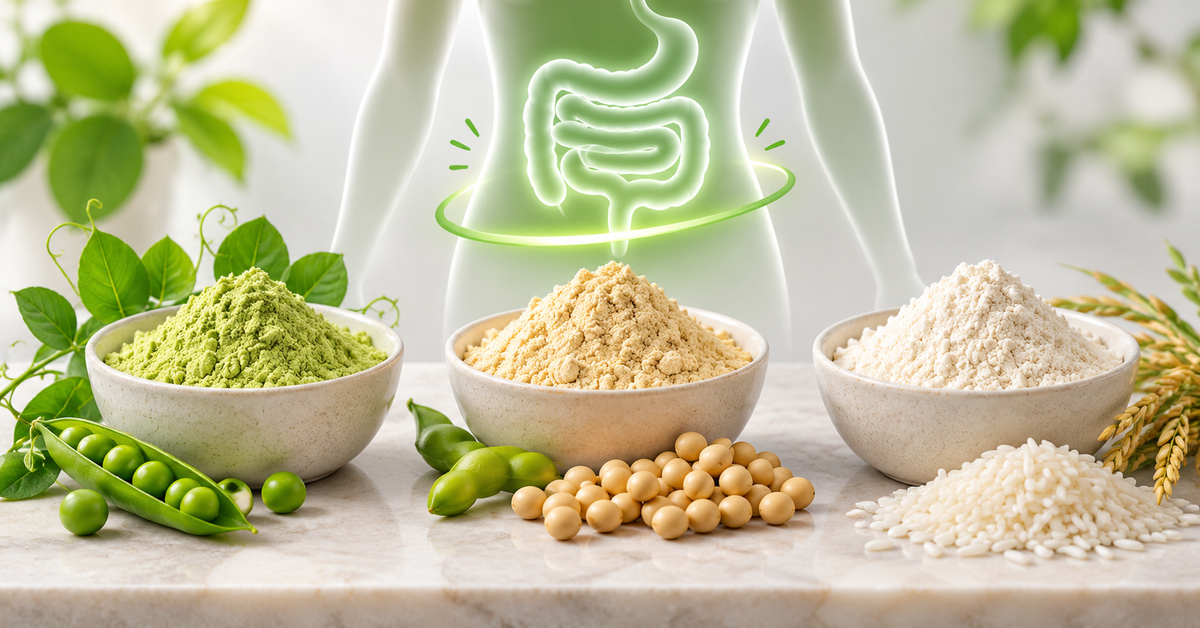
Not all proteins are digested in the same way, and choosing the right one can make a difference. Soy, pea and rice have different characteristics that influence how well they are tolerated during digestion.
Discover which one causes less gas, why the isolation process matters, and which combination can help support better digestion without compromising protein intake.
Pea, soy or rice protein: Which causes less gas and is easier to digest?
Quick Digestibility Comparison
Generally speaking, pea and rice protein isolates are among the easiest plant-based proteins to digest. This is particularly true when they have been processed to reduce their fermentable oligosaccharide content.
However, not all proteins are digested equally. Digestive tolerance depends largely on the main protein source, the degree of isolation, its fibre content and individual sensitivity.
Protein type |
FODMAP level |
Gastric emptying rate |
Digestibility rating |
Pea + rice (isolates) |
Low, depending on formulation |
Variable; no specific rate has been established |
Potentially high; depends on the ratio and processing |
Pea protein isolate |
Generally low |
Variable |
High |
Rice protein isolate |
Generally low |
Variable |
High, although with a lower lysine content |
Soy protein isolate |
Generally low |
Variable |
Very high |
Less refined plant protein concentrates |
Variable; may contain more FODMAPs |
Variable |
Depends on processing |
What does this mean for your digestion? The fewer fermentable carbohydrates a protein contains, the lower its potential to produce gas through intestinal fermentation. Therefore, rather than focusing solely on whether a protein comes from peas, soy or rice, it is important to check whether it is an isolate and to consider the product's complete composition.
Soy Protein: Why Can It Cause More Bloating?
Soy protein is a highly nutritious plant-based protein source, but some forms may cause gas, abdominal bloating and digestive discomfort, especially in people with sensitive digestive systems.
The reason is not necessarily the protein itself, but certain fermentable carbohydrates and naturally occurring compounds found in soy. Their concentration depends largely on how the soy has been processed.
Presence of Fermentable Oligosaccharides (FODMAPs)
Soy naturally contains raffinose and stachyose, two types of fermentable oligosaccharides belonging to the FODMAP group. This is one of the main reasons why some soy-containing products can cause gas.
Generally, our bodies do not have sufficient alpha-galactosidase enzyme activity to break down these soy carbohydrates during digestion.
As a result, gas may be produced, contributing to:
- Abdominal bloating and distension.
- Gas build-up and flatulence.
- A feeling of heaviness or intestinal discomfort.
Do all soy proteins cause the same amount of gas? No. Soy protein isolate generally contains much smaller amounts of these oligosaccharides than whole soybeans or soy flour, making it potentially easier to tolerate.
Trypsin Inhibitors and Phytates in Non-Isolated Soy
In addition to FODMAPs, soy naturally contains certain antinutrients that may interfere with the body's ability to use some nutrients.
Among the best known are:
- Trypsin inhibitors: these reduce the activity of trypsin, a digestive enzyme produced by the pancreas that helps break down proteins. When present in high amounts, they may make digestion more difficult.
- Phytates or phytic acid: these can bind to minerals such as iron, zinc and calcium, reducing their absorption. They may also interact with proteins and certain digestive enzymes, affecting nutrient utilisation.
However, soy processing makes an important difference. Treatments such as cooking, fermentation and certain protein extraction processes help reduce the activity of these compounds and improve digestibility.
Pea Protein: A Hypoallergenic Alternative with High Digestive Tolerance
Pea protein has become one of the most popular plant-based alternatives thanks to its amino acid profile, digestibility and low allergenic potential.
Although whole peas contain fibre and fermentable carbohydrates that may cause gas, pea protein isolate generally offers better digestive tolerance. This makes it an interesting option for those looking for a highly digestible plant protein isolate.
Why the Isolation Process ("Isolate") Reduces Gas Formation
The difference between eating whole peas and consuming pea protein isolate lies in their composition. Peas naturally contain fibre, starch and fermentable oligosaccharides that can be used by intestinal bacteria when they reach the large intestine, producing gas.
During the production of pea protein isolate, the protein fraction is separated and concentrated, removing a large proportion of the fibre, starch and fermentable carbohydrates.
This process offers two main advantages:
- Less intestinal fermentation: reducing fibre and fermentable oligosaccharides decreases the amount of material available to bacteria in the colon, potentially helping to reduce gas production and bloating.
- High concentration of protein and essential amino acids: the protein isolate provides a profile rich in branched-chain amino acids (BCAAs), particularly leucine.
Furthermore, by reducing non-protein components, the isolate makes it possible to obtain a high amount of protein per serving without consuming large quantities of legumes.
Does this mean pea protein isolate never causes gas? Not necessarily. Although it generally contains fewer fermentable compounds than whole peas, tolerance depends on individual sensitivity, the degree of purification and other ingredients added to the formula.
Rice Protein: A Gentle Option for Sensitive Stomachs
Another excellent alternative for people with sensitive digestion is rice protein, which also offers good intestinal tolerance and low allergenic potential.
Furthermore, when provided as a protein isolate, it contains reduced amounts of fibre and fermentable carbohydrates, which may help minimise gas production, abdominal bloating and feelings of heaviness after consumption.
Unlike some other plant sources, rice protein isolate generally has a low FODMAP content. This means it provides few carbohydrates that can be fermented by the intestinal microbiota, helping improve tolerance.
However, although rice protein offers digestive advantages, it has an important nutritional limitation: its lysine content is relatively low. Lysine is one of the nine essential amino acids that the body cannot produce on its own and must obtain through food. In this respect, rice protein is less complete as a protein source.
Conclusion: Which Protein Should You Choose If You Tend to Experience Gas?
If you frequently experience gas, abdominal bloating or feelings of heaviness after consuming plant-based protein, one option worth considering is pea or rice protein isolate, preferably enriched with digestive enzymes.
When choosing between plant-based proteins, prioritise products that clearly state they contain protein isolates (isolate), check for added fibre, inulin or sweeteners such as polyols, and consider formulas containing digestive enzymes.
Ultimately, the key is to choose a high-quality formula with few fermentable ingredients that suits your individual digestive tolerance.