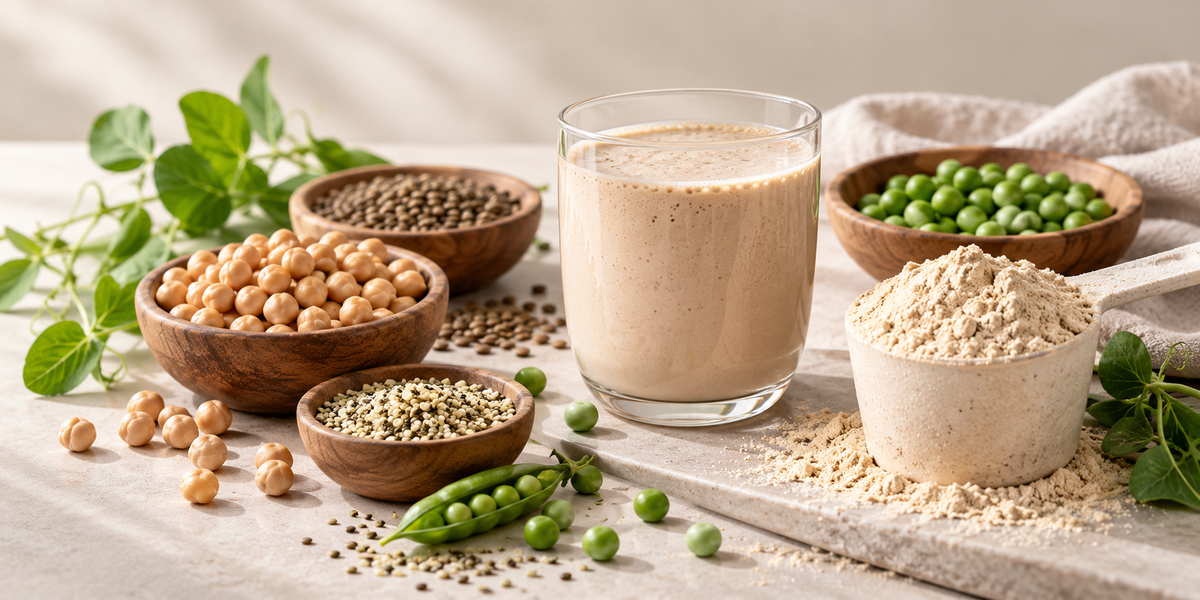
Vegan proteins are a good alternative for supplementing your diet and improving the maintenance of muscle mass, but they may cause digestive discomfort in some people.
This does not mean that plant-based protein is inherently difficult to digest. The quality of the ingredients, the type of protein, its processing and the composition of the formula can influence how your digestive system responds.
In fact, not all plant-based proteins are the same. While some formulas contain blends of different legumes, fibres and other ingredients that may promote intestinal fermentation, others focus on more purified protein isolates and carefully developed compositions.
Why Powdered Legumes Can Cause Bloating in Your Digestive System
Legumes are a source of nutrients and plant-based proteins, but they also contain compounds that can be difficult to digest. When used to produce protein supplements, their composition and the processing they undergo can directly influence digestive tolerance.
One of the main reasons is the presence of fermentable oligosaccharides, such as raffinose and stachyose, which are naturally found in legumes such as peas, soybeans and chickpeas.
Our bodies do not have the enzymes needed to completely break down these carbohydrates in the small intestine. As a result, some of them reach the large intestine, where bacteria in the gut microbiota ferment them and produce gas during the process.
Although this fermentation is a natural phenomenon, in people with greater digestive sensitivity it can cause abdominal bloating, flatulence and a feeling of heaviness after consuming plant-based protein.
The Role of Proteolytic Enzymes: How Actinidin from Kiwi Works
When we consume proteins, our bodies need to break them down into smaller fragments to make use of their amino acids. This process involves proteolytic enzymes, also known as proteases, which play a fundamental role in protein digestion.
Actinizyme®: The Science Behind Efficient Protein Breakdown
It is a naturally derived ingredient that provides actinidin from green kiwi, selected for its proteolytic activity and its application in nutritional formulations.
Its mechanism of action can be explained in three stages:
- Contact with proteins: actinidin interacts with certain protein structures found in foods.
- Breaking peptide bonds: its proteolytic activity helps break proteins down into smaller peptides.
- Continuation of the digestive process: these fragments can continue to be processed by the body's enzymes until amino acids and small peptides that can be absorbed are obtained.
However, it is important to distinguish between the demonstrated proteolytic activity of actinidin and its potential effects on digestive discomfort. The fact that an enzyme participates in protein breakdown does not mean that it eliminates gas or abdominal bloating, as these symptoms can have different causes.
Therefore, when developing a plant-based protein, it is not only the amount of protein it contains that matters, but also the selection of the ingredients that make up its composition.
Gut Microbiota and Supplementation: The Importance of Stable Probiotics
When we consume plant-based protein, digestive enzymes are not the only ones involved. The gut microbiota also participates in the fermentation of food components that have not been completely digested in the small intestine.
During this process, gases may be produced which, in people with greater digestive sensitivity, can cause abdominal bloating, flatulence or a feeling of heaviness.
However, not all probiotics have the same stability or ability to survive gastrointestinal transit. For them to exert their potential effects, it is important that they maintain their viability and reach the site where they are intended to act in adequate quantities.
LactoSpore®: How to Ensure Beneficial Bacteria Reach the Intestine Alive
One of the main challenges of supplementation with live microorganisms is ensuring that they withstand the conditions they encounter from manufacturing until they reach the intestine.
Factors such as temperature, humidity and stomach acidity can affect the viability of certain bacteria. Therefore, the stability of the strains used is an important aspect in the development of food supplements.
LactoSpore® contains Bacillus coagulans MTCC 5856, a bacterial strain characterised by its natural ability to form spores, resistant structures that allow the microorganism to survive under unfavourable environmental conditions.
This characteristic distinguishes Bacillus coagulans from other bacteria that do not form spores and provides certain advantages, such as resistance to gastric conditions, greater stability and an improved ability to reach the intestine.
These properties make LactoSpore® an ingredient of interest for the development of food supplements containing live microorganisms.
Furthermore, the Bacillus coagulans MTCC 5856 strain has been the subject of scientific research into its tolerability and potential gastrointestinal effects. However, the results of these studies must be interpreted taking into account the populations studied, the doses used and the specific conditions of each investigation.
The survival of a probiotic during digestion does not guarantee the elimination of gas or abdominal bloating, as these discomforts may be related to different dietary and digestive factors.
Enjoy a Shake Without Feeling Heavy: The Advantage of Scientifically Backed Formulas
Choosing a plant-based protein should not be limited to comparing the amount of protein per serving or the flavour of the product. The quality of the ingredients, their processing and the scientific evidence supporting the formulation are fundamental aspects when finding a supplement that suits your nutritional needs and daily routine.
As we have seen, gas and bloating after consuming plant-based protein can be related to different factors, from the presence of fermentable carbohydrates to certain added ingredients or individual digestive sensitivity. Therefore, choosing carefully developed formulas can make a difference in the consumption experience.
In this context, NDL Vegan Protein combines three ingredients selected for their nutritional and functional characteristics: PURIS®, an 80% pea protein isolate; Actinizyme®, an enzyme derived from green kiwi that participates in protein breakdown; and LactoSpore®, a bacterial strain characterised by its stability and ability to survive gastrointestinal transit.
This combination reflects NDL Pro-Health's commitment to supplementation based on the selection of high-quality ingredients and scientific knowledge of their properties.
The best plant-based protein is one that combines adequate nutritional intake, quality ingredients and a formulation that suits you. Because taking care of your muscles also means paying attention to how you feel after every serving.